Weightlifting 101
Knowledge from my 10+ year journey as a weightlifting nerd, distilled

Regal’s Weightlifting Advice
This is a non-exhaustive mini-blog post of important fitness and nutrition info.
By no means an expert, I’m a big nerd who’s had his fair share of fitness + nutrition successes and failures.
This guide is generally aimed at new or prospective lifters with advanced tips at the end.
And to keep things simple, I’ll broadly break this guide down into 3 steps:
- Understanding the Biology Basics
- Choosing a Routine and tracking it
- The Mental Approach
And real quick, I need to impress upon you that you do NOT need a fancy gym membership (or gym at all) to make significant weightlifting/muscle/aesthetic gains. It is fully possible to meaningfully improve your physical ability through bodyweight exercises alone. That being said I’ll mostly be writing from the assumption that you have access to some gym equipment.
Biology and Biomechanics!
This is just a primer to help paint a picture of what weightlifting does to the body, and how to use those mechanics to hit our physique and strength goals 
Mind-Muscle Connection
You’re already using your muscles day-to-day doing all sorts of things. So aside from complicated lifting movements, where’s the skill in weightlifting?
Getting stronger from lifting weights is a twofold process:
- Building bigger, stronger muscles
- Improving the Central Nervous System (CNS) connection pathways between your mind and your muscles.
Most of this guide is about how to achieve #1, but #2 is the key to unlocking faster and safer progress in the gym.
It sounds like gym bro science but this is real.1 It’s nearly as simple as “thinking about the muscle you’re using as you use it.”
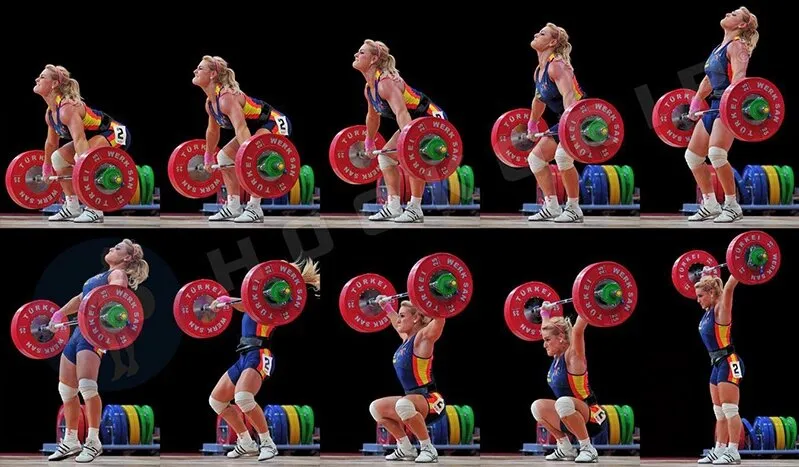 Spanish 2-time world champion Lydia Valentín performing the Clean and Jerk at the 2016 Olympics
It’s easiest to think about with the big impressive lifts, like deadlifts or squats. And it’s another step more obvious when you consider movements like the Clean & Jerk (above).
The idea is that you’re not just *doing the movement*, you’re visualizing the movement and specifically focusing on the correct muscles to tighten and activate at the right time.
The best way to understand this concept is to do a simple movement like a dumbbell bicep curl. Do it with a light weight, and just perform the movement normally. Then try again while specifically focusing on contracting your biceps. It’ll sound goofy and feel a bit goofy, but this is what I’m talking about. It’s a basic skill that compounds as you get into more complex and heavier lifts. It’s important both for performance and safety.
You Gotta Rest
I got bad news. If you want to build muscle in any meaningful magnitude…you’re gonna have to fix your sleep schedule. Non-negotiable.
 I know.
Turns out that from a biology standpoint when it comes to “what actually leads to building stronger muscles”, *lifting weights* is a distant third to Diet and Sleep.
I promised myself I wouldn’t go into the depths of muscle tissue biology in this guide, so pardon the simplification: building muscle means stressing and breaking down your existing muscle, and signaling to your body that it needs to grow back better and stronger.

I’ll never use my biology degree for anything at this rate…
The long and short is that you should have rest days in your workout program (the number of which depends on your health, lifestyle, and interest!—but I’ll say if you’re lifting more than 5x days a week you’re probably doing too much) and you should shoot for 8+ hours of sleep a night.
Lifting weights is exciting, and once you get into it and start getting results it’s pretty tempting to just go all out on your workouts. That’s great! But take your resting seriously. 3 days/wk in the gym with healthy sleep is worth much more than 5 days/wk with bad sleep. Put that extra gym time into sleep instead and you’ll come out on top!
There is also a condition called overtraining. It’s an actual medical condition but it’s not common, and you probably won’t hit this point. But it’s a good thing to keep in mind if you feel like you’re not getting high-quality sleep, or can’t shake off your workout fatigue.

Building or Choosing a Routine
This is the area that will stop most folks. It’s very intimidating going or even thinking of going to a gym, just to see 100 machines and pieces of equipment and not knowing where at all to start.
And of course if you try and google this, you’ll just find endless fitness influencers trying to sell you their program.
Some of them do have pretty solid routines, but you really don’t need to spend money to organize exercises that’ll help you reach your goals.
Small note, I’m assuming from here on that you have access to a full gym. Box gym, local, etc. Calisthenics and bodyweight exercises are tremendous, but they’re not my wheelhouse
Choosing a Split
First and simply, you need to decide how many days you want to lift weights a week, and then divide up your muscles into groups for that. This is called a “workout split”. The idea of which is to maximize muscle growth and proper rest, depending on how often you lift.

Recommendations TL;DR if you want to skip ahead:
- 2-3 days: Full Body
- 4 Days: Upper/Lower
- 5+ days: up to you! Just don’t do full body each day.
Full Body
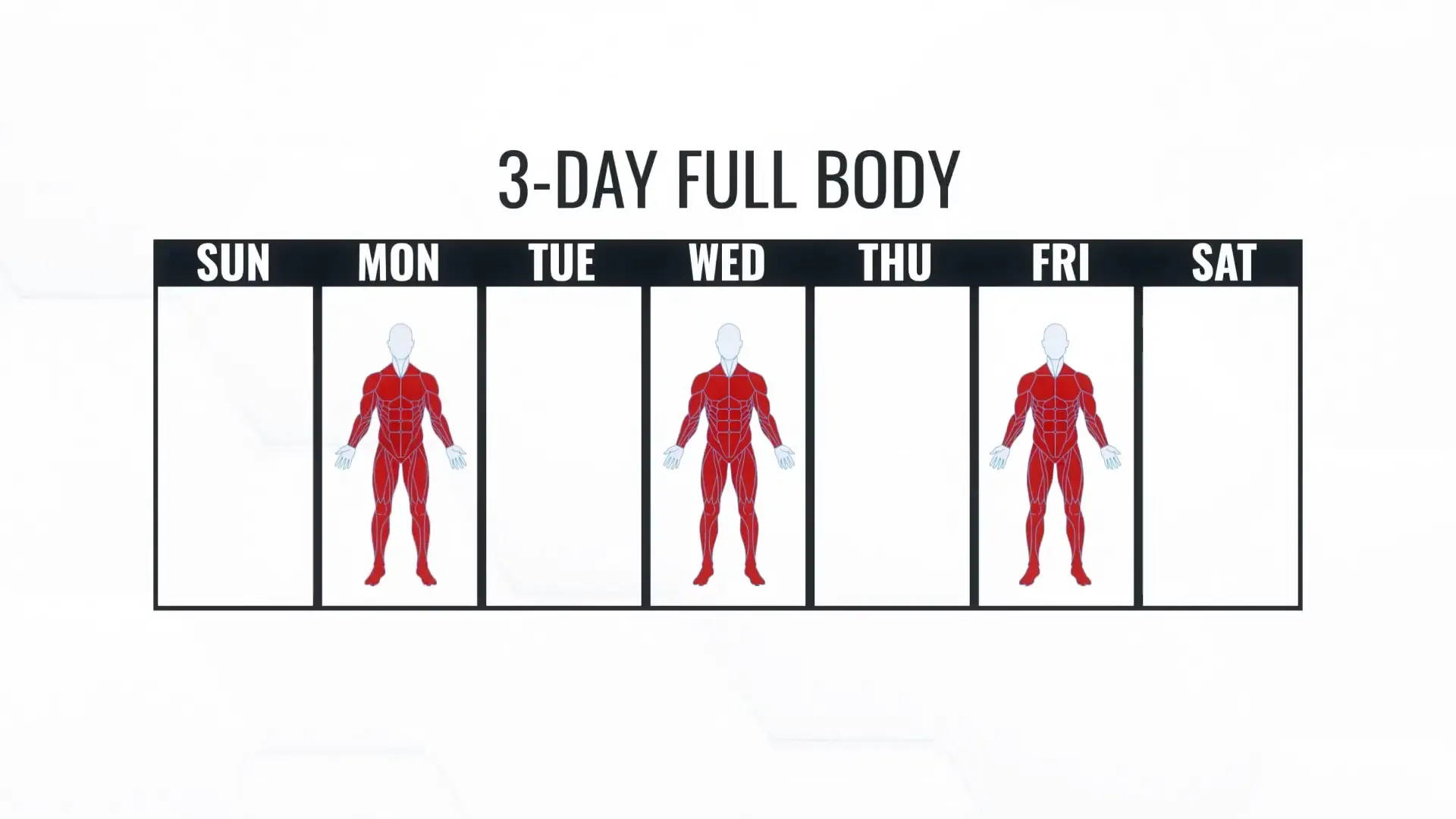 Always leave at least one day of rest in between a full-body workout!
Generally the best suggestion for new lifters! Go to the gym 2 or 3 days a week, and try and hit each major muscle group at least once each time.
Prioritize the biggest muscles, and do their exercises first if possible. Then work your way down.
The downside with full-body workouts is that they tend to be a bit longer, as you need more time to hit so many muscles.
Upper/Lower
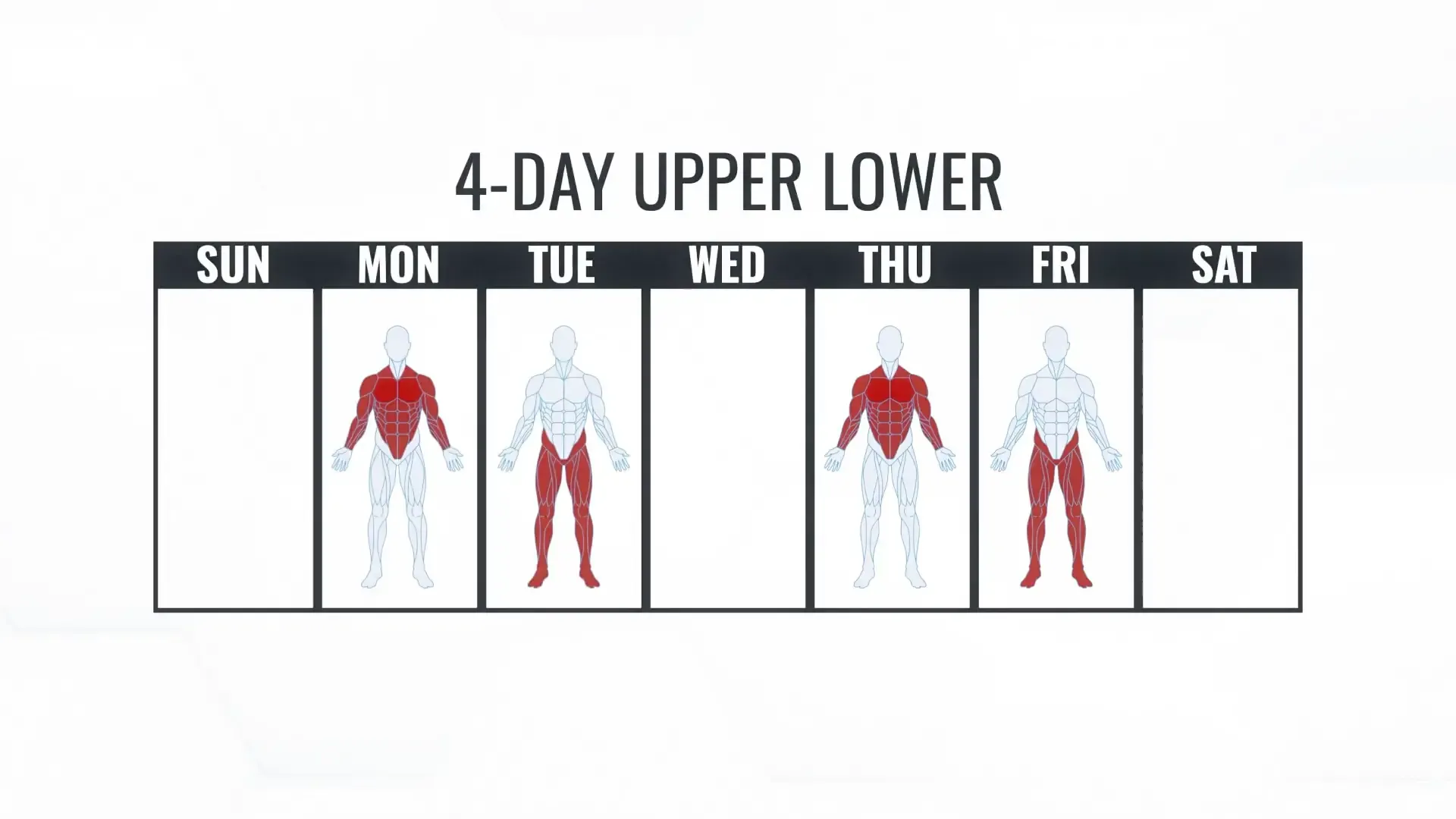
This is my personal favorite split for three big reasons:
- I genuinely feel that it strikes the perfect balance of hitting every muscle, and giving me the opportunity to hit them at least 2x a week with plenty of rest
- Many lifters, myself included tend to overemphasize chest or back training compared to legs, and this forces a more appropriate split of effort
- 4 Days of lifting is plenty of weightlifting. I personally think it’s the sweet spot, allowing for plenty of rest and not making this hobby consume your life.
 Art by: maxadisasta
Currently (September 2026) I run this split with a 5th day on the weekend dedicated to just arms and shoulders. The 5th day is totally unnecessary for the average lifter but I add it because I love weightlifting and I prefer to replace the biceps & triceps exercises in my “Upper” days with more large muscle movements.
Push/Pull/Legs
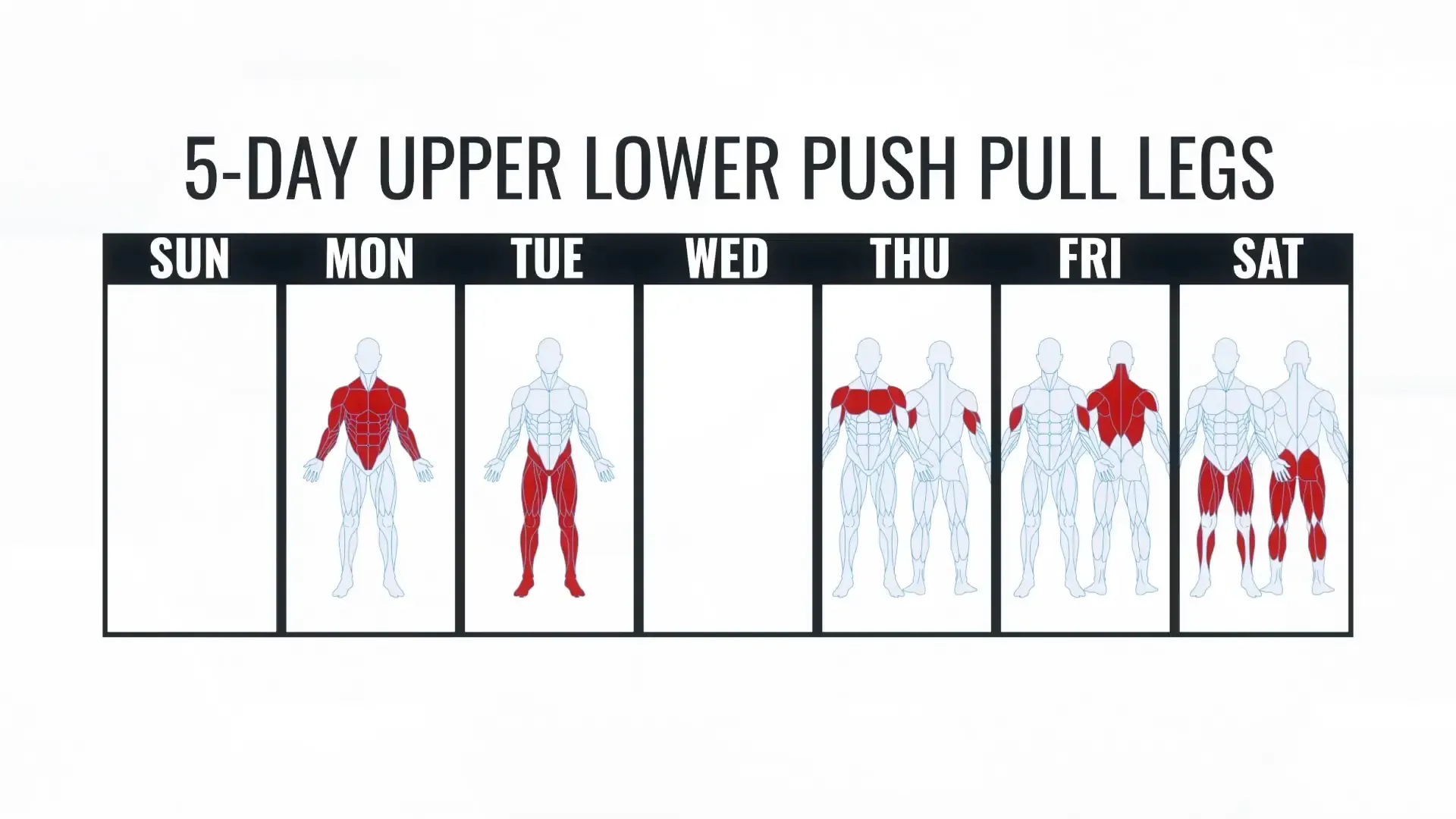
Nearly the same as the Upper/Lower split, but you further split your Upper day into “Pushing” motions (chest, triceps, etc.) and “Pulling” (back, biceps). You can also further divide the leg day into a “leg” day and a “hinge” day where you do squats on one day, and deadlifts or RDLs on the other.
I ran this split many times in my early days, and the best thing I can say about it is it lets you try out a wide variety of exercises. It’s certainly not a bad split, but I think splitting this far is kind of overkill, and overemphasizes variety compared to *hitting each muscle at least 2x/week*
Bro Split
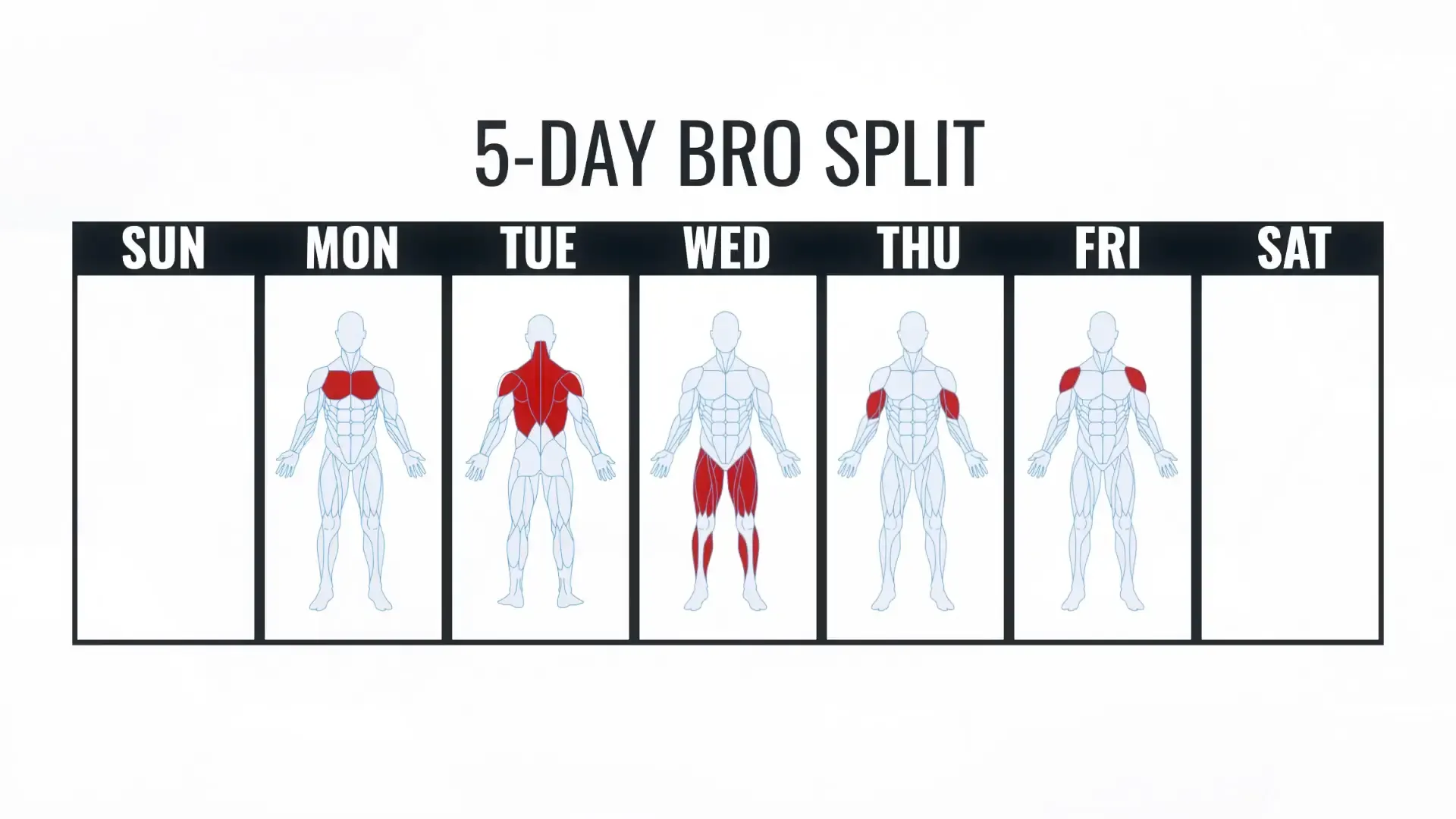 It’s like you’re doing nothing at all…
Evil. Bad. Nasty.
Look. Everyone has their favorite muscle or muscle group to train. For me it’s chest. I’m an absolute chest goblin. Having an entire day to JUST do chest exercises? Insanely gratifying.
But don’t do it. Resist the siren’s call…this split will waste your time. Why? Because spending 5 days a week training every muscle exactly once is incredibly inefficient.
Training a single muscle to death in a workout produces diminishing results as the fatigue breaks down form, and your muscle hits its limit for constructive breakdown. Rest is a vital component of muscle growth and development; working a high-priority muscle 2-3 days a week with 1-2 exercises each of those days will produce much more consistent growth.
Try the Bro Split if you want…it is kinda fun. But be good to yourself and don’t stick to it.
 Art by Gees
Which Exercises?
So you’ve picked a workout split. Good job! Now comes the fun part: choosing which exercises to do.
There are many ways to do this! If you can ask an experienced friend, go with that. Otherwise I recommend just going to your gym and looking around. Seriously! Just walk around, peek at machines, try them out. Or even just watch others doing exercises and decide if that looks fun to you.
If you’re just starting out then your #1 goal the gym is to get yourself to enjoy being at the gym. Even just a little bit. Optimization can come later. Very few exercises at the gym are *bad.* At worst they’re just not efficient. And that’s okay.
The Big Four
The so-called “Big Four” of weightlifting are:
- Bench Press
- Deadlift
- Squat
- Military/Standing Press
These are all excellent exercises, and altogether train the vast majority of your largest muscles holistically. As Compound exercises, they may focus on one or two major muscles in the movement, but ultimately recruit many other muscles in your body to stabilize throughout the motion.
What is a Compound Movement? 
Think about a squat. Yes you’re using your quads and hamstrings to lower yourself and raise yourself up again. But you’re also using your glutes to keep your back in position, your hips and abdominal muscles to keep your core steady, and if you’re holding weight on your back, you’re tightening your lats to keep the weight stable.
Compound!
Isolation exercises by contrast, typically use equipment or leverage to isolate one muscle or muscle group as best as possible. Something like a concentration curl:
 Art by NoMoreBiscuit
This exercise pins your elbow on your leg so that as you do your bicep curl, the rest of your body is stabilized so that you don’t “cheat” and use your torso or shoulders to move the weight. Just biceps!
You do not need to do the Big Four to be successful in the gym. However, they’re a great guide helping you decide what lifts *to* do!
Don’t want to do a bench press? Find a machine that does the same motion–it’ll likely be a fair replacement!
Not confident enough to do squats? Well, the leg press machine is just about a more stable squat anyways, so give that a shot instead!
The Machine Circuit
If you’re a beginner, are intimidated by the options and want somewhere to start where the instructions are clearly laid out without having to talk to anyone, then may I introduce…
 The Machine Circuit
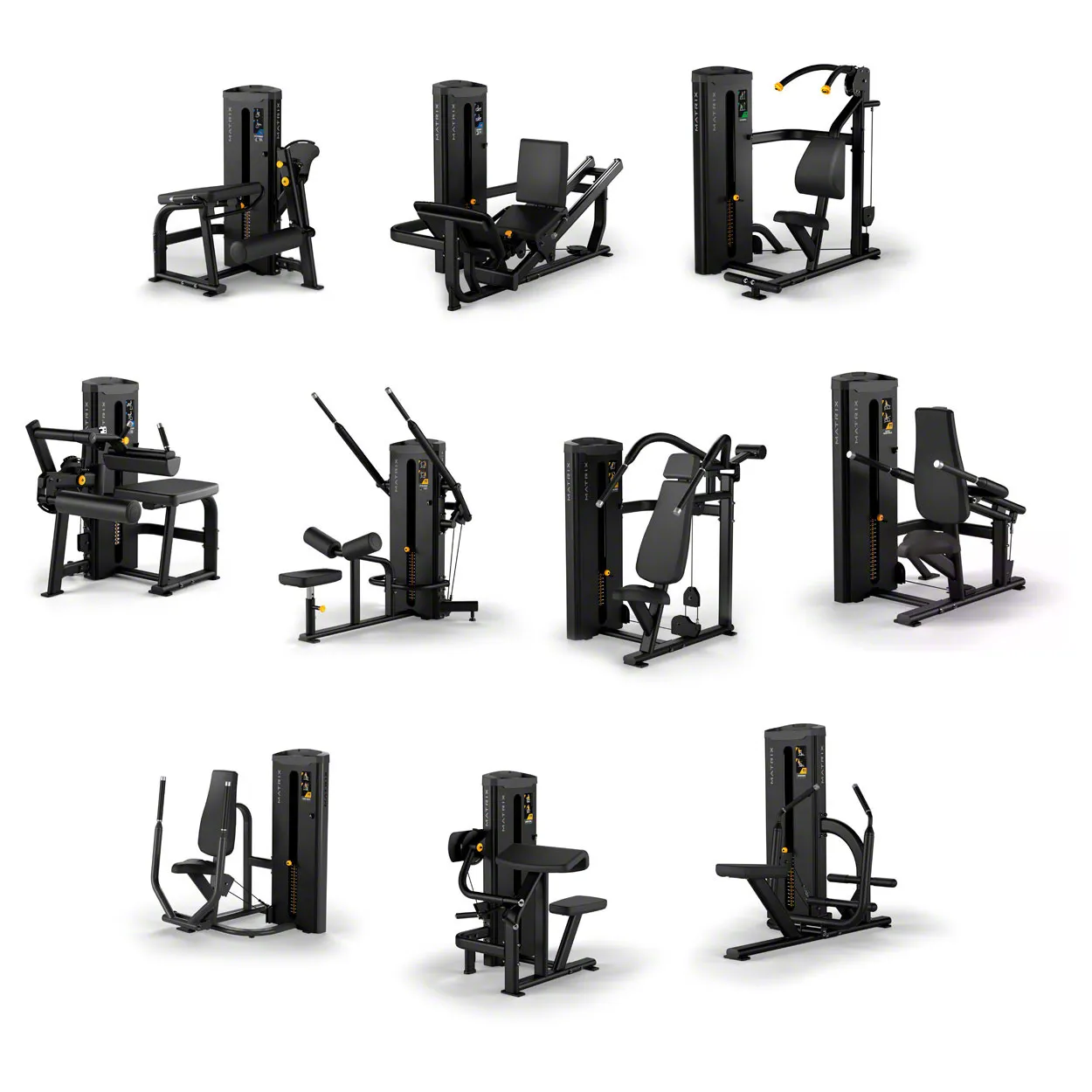 An example of a single-brand “circuit” of lifting machines
Gold’s Gym has a pretty solid guide on this, actually! But it’s really pretty simple: nearly every medium or larger gym will inevitably have a selection of hyper-specific weightlifting machines, often of a single brand. Your workout routine is simply going through these machines, and performing the ones that fit your plan for that day!
Leg day? Find the leg press, the leg extension, and the hamstring curl machine. Oh? Spotted a calf raise? That’s legs, try that too! “Leg Abduction…?” Heck, try that too!
Most of these machines have the instructions printed right on them, so you won’t even have to ask anyone for help.
Machines vs. Cables vs. Free-Weights
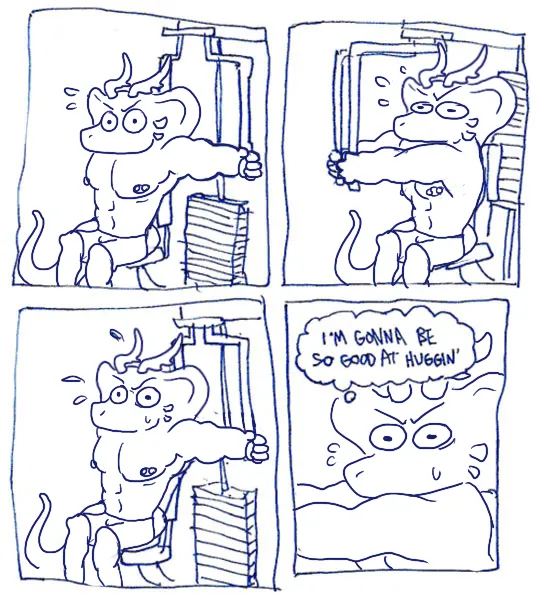 Extremely accurate comic. Meme edit by Sprout
“Free-weights” refers to weightlifting movements that use non-machine weights like dumbbells, barbells, kettlebells…any kind of bell, really. lol.
Outside of doing an entire circuit of machines, there’s nothing that limits them to just beginners in the gym. In my experience, having a mix of machine and free-weight exercises has worked best for me.
Machines are very good at 2 things:
- Isolating muscles and movements
- Offer stability for complex movements
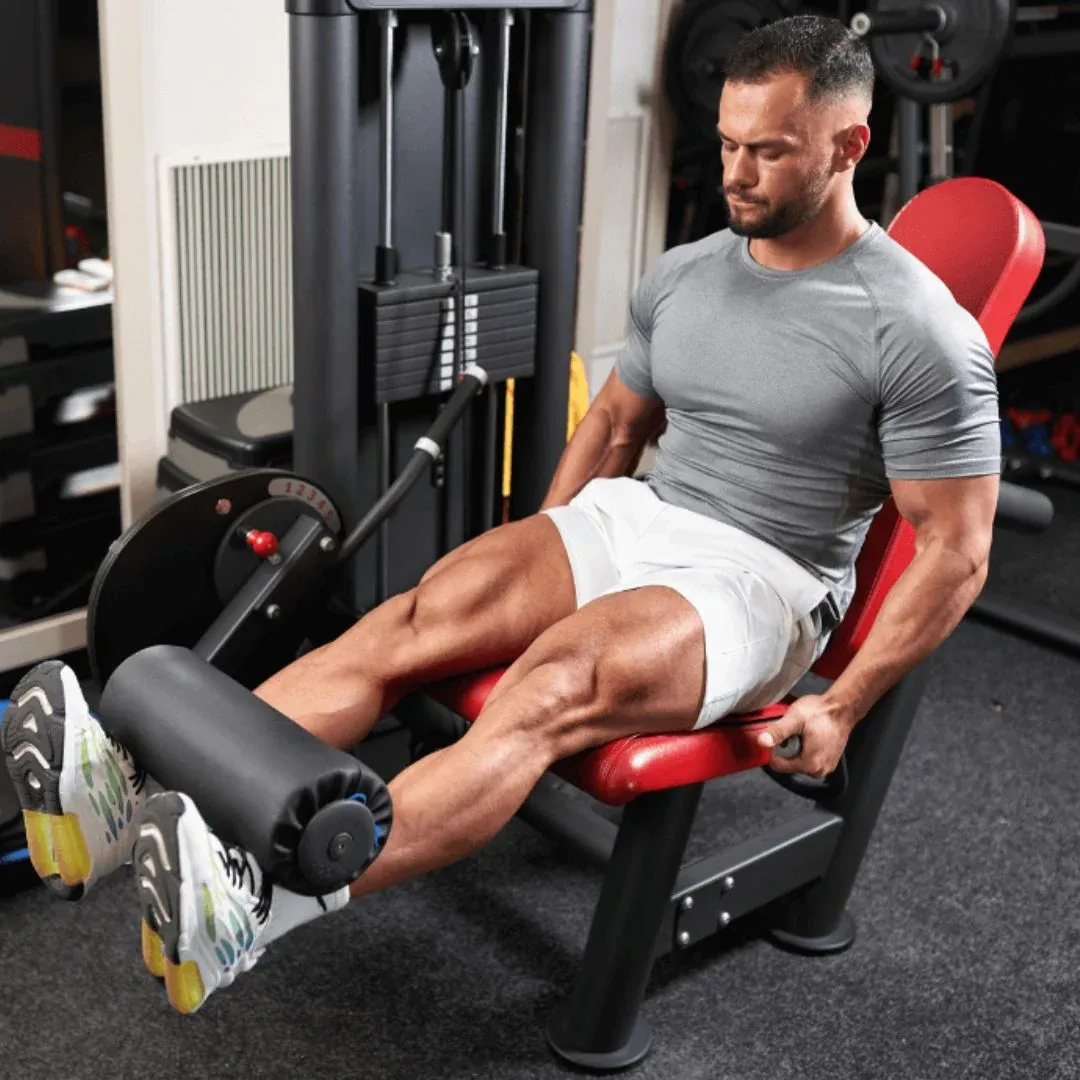 A dastardly simple, yet difficult (and satisfying) machine to use
The leg extension machine is a great example of these 2 qualities.
Isolation: This machine focuses on working your quadriceps—a very large and complex muscle used heavily in squatting movements (along with many other muscles). Developing it in isolation is tricky, but a stable machine like this lets you focus on its one job: extending the lower leg.
Stability: There are other isolation exercises for the quads, like the cable leg extension. They’re also effective but offer much less stability than a machine like this. Less stability = spending energy on other muscles, so it can mean a little less efficiency.
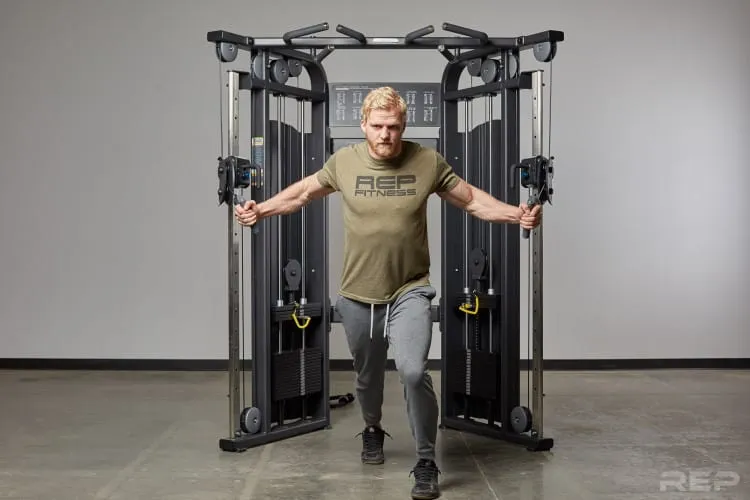
Cable machines are difficult to describe because they’re so dang versatile. They’re still firmly in the “machine” category, but I separate it because of how unique they are. They enable us to perform movements in line with our muscle anatomy without sacrificing the effectiveness of the lift itself.
If I had to pick a single piece of gym equipment out of everything out there, I’d 100% pick a machine like the one pictured above.
Pulleys are magic!! Easily one of my top 3 of simple machines

Ultimately there’s upside or downside to free weights vs. machines. They will both grow your strength and muscle the same amount.2 Choose based on availability and preference. I highly recommend experimenting! You’ll definitely find machines and lifts you like and don’t like.

Lately I’ve been leaning more heavily towards free weights because my current fitness goals are holistic, and about improving overall core and hip stability.
Volume vs. “Going Heavy”
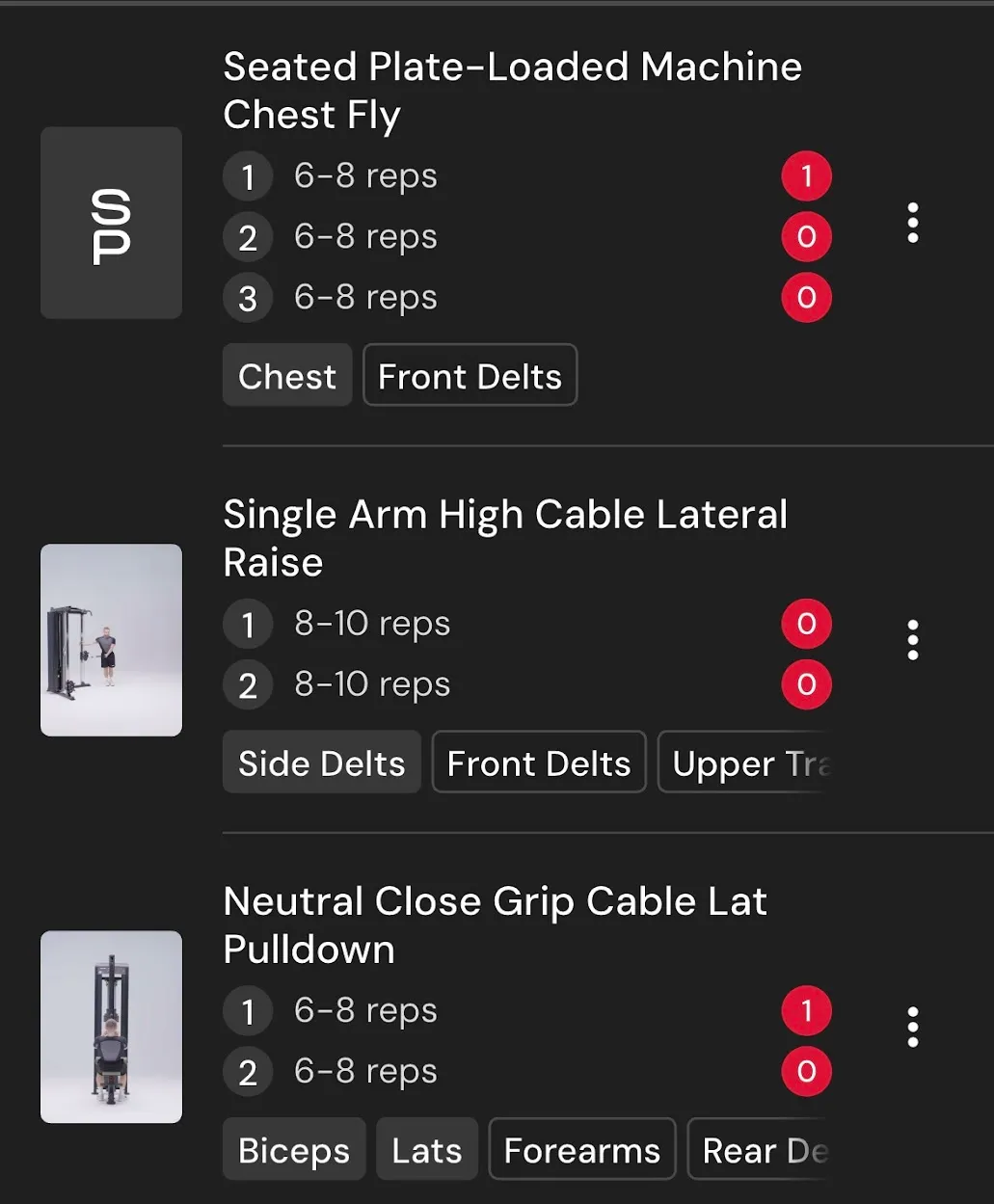 App or pen & paper, you can’t have a workout routine without deciding how many times you’re actually doing a lift!
This boils down to the question of how much weight are you lifting versus how many repetitions (reps) in a single set.
Volume approach: lift lighter, but perform more reps (> 10, often 12-15 range).
Strength approach: lift heavy, perform fewer reps (< 10, ranges vary).
So how do you choose? To me, the choice is between strategically tiring out the muscle tissue (volume), or the entire Central Nervous System (CNS) pathway response (strength). Let me explain.
Volume has always been suggested to me as the *bodybuilder* path. It mechanically depletes the energy in your muscles and stimulates a simple but powerful “build more muscle” response.
I like how this redditor explains it:
Lower load/higher volume consumes more glucose, creates more constriction in the blood vessels, creates a lower oxygen environment. Higher threshold motor units begin to cycle in and out as they fatigue, generating a lot of lactate and related metabolites. This is a potent signaling trigger to make more muscle and increase local glucose storage in the muscle. A bigger muscle is a stronger muscle.
Strength meanwhile emphasizes overloading the entire lifting system. Yes, bigger muscle = bigger strength, but muscle alone doesn’t equate to performance.
Big muscle does translate to power output, but the CNS is the arbiter of technique and control. How do you squeeze every last drop of power out of a muscle? Training and practice! Weightlifting like any other sport rewards practice.
Training for strength means overloading your nervous system, your tendons, and your connective tissue. It makes them the “weak link” to a lift, rather than muscular fatigue. And thus, your body works to improve those weaknesses.
So Which One?
Here’s my take: if you’re new to lifting, go with volume. Training for volume will teach you the movements, and how they affect your body. High intensity/heavy weight training requires better technique to avoid injury, and benefits greatly from innately understanding your muscles, and how they move/feel.
I personally mix the two in my current workouts, but generally lean towards going heavy. But when I started out I nearly exclusively trained with volume.
Tracking Progress
Art by NoMoreBiscuit
How do you know you’re performing a lift effectively? Not just form, but how do you know that when you finish a set it’s meaningfully contributing to growth and progress?
Long-term, the answer is pretty simple:
- Number go up?
- How do you look in the mirror?
- How are your clothes fitting?
But short-term…as in, in the moment, how do you KNOW you’re doing a good job?
Log It!
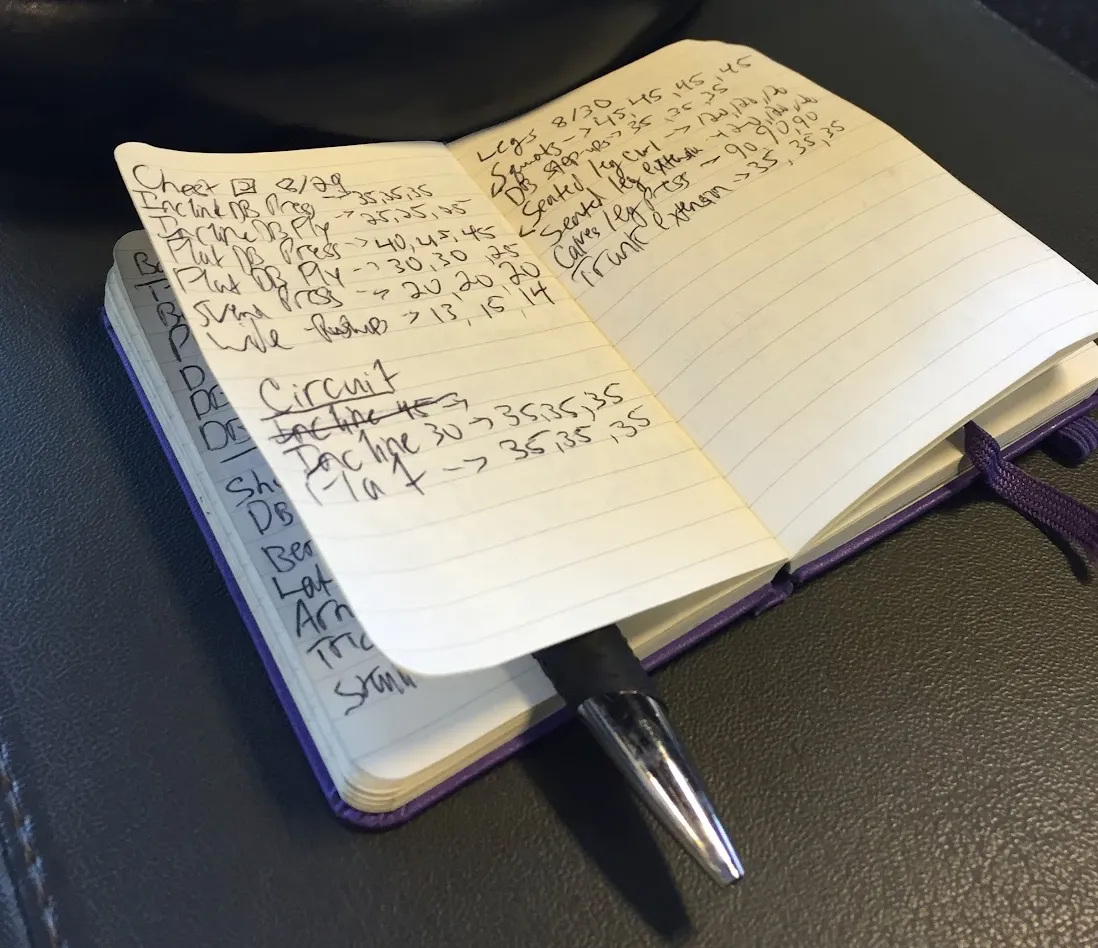 Behold my ancient 2018 logs
You absolutely must track your weights. I promise you will not meaningfully remember your weights from week to week well enough to ensure you’re actually progressing.
You don’t need a fancy app! I still have my old ratty log books from almost 10 years ago now. I regret not putting years on the dates…but those served me perfectly well.
I recommend recording:
- Date
- Exercise name
- How much weight you lifted
- How many reps
- How many more reps could you have done if you had kept lifting
If you do want a fancy app, I really like Jeff Nippard’s Macrofactor Workouts app. It’s my daily driver these days. And not to shill for it without the benefit of a commission but I really appreciate the slick multi-angle exercise videos.
How Are Those Clothes Fitting?
 Art by psionicpsycho
The number on your bathroom scale is a helpful metric, but we’re here to change our bodies in a noticeable way! And nothing is more noticeable than your favorite shirt fitting just a bit differently…
Perhaps your pants are looser than they used to be? Or maybe tighter around the thighs?
If you get the feeling that your clothes aren’t fitting the same, don’t dismiss the thought—investigate! What’s changed? How have you changed? This is what it’s all about! Revel in the success of outgrowing or filling out your clothing!
I also recommend shopping around for some aspirational clothing too! Maybe some shorts that show off your legs a bit, or a tank top you’re excited to fill in.
I’ll tell you now, no one cares what you’re wearing or if you’re “fit” enough to wear it. Find clothes that make you feel good, or give you something to work for!
The Tough Stuff
 Art by Oblvon
Briefly I want to address the roadblocks to weightlifting. Things that I and many others go through as we progress from beginners to advanced in this sport.
The physical barriers are mostly obvious, but coupled with the mental hurdles and the fact that weightlifting can be an innately vulnerable experience in public, I want to share some of my learned experience in the field.
The Comparison Pitfall
 Art by Cinna
So you’re at the gym for the first time, and immediately everything is overwhelming and intimidating…
First and foremost it will be impossible not to compare yourself to others, so don’t feel bad if you catch yourself doing it. I wish I could say “let someone else’s physique motivate you!” But that’s just the bodybuilding equivalent of telling a depressed person to “cheer up”, so no that’s not an option.
It’s also intimidating being new at a gym, and feeling out of place. It’ll feel like people are always looking at you, and that you’re just one misstep from a grievous faux pass. It’s not true, of course, but let’s talk about these feelings.
Do I Not Belong Here?
.BhZtQJ_U_mr7xX.webp)
It’s impossible to feel like a regular on your first day. But keep showing up and making your best effort, and you’ll feel right at home. I promise. And if you’re really feeling nervous about it I cannot recommend enough the power of bringing a friend. Especially potent if they’re already a regular there!
I would have never gotten this far without my friend James I met in Seattle who showed me the best ways to put a routine together. :3
And if you’re worried that people are looking at you, here are a some reasons why someone at the gym might be looking at you:
- They’re waiting for your machine/equipment to become free and trying not to look like they’re waiting so that you don’t feel rushed
- They’re curious about what kind of exercise you’re doing
- They’re experienced and possibly worried you might be doing something dangerous, and are keeping an eye out
- They’re bored & resting between their sets, and are just looking around (it’s usually this one)
I feel very confident about this because I have looked at my fellow gym-goers for all of these reasons, and so have my friends.
People are generally very nice at gyms. It’s a vulnerable space with a clear unifying mission: get stronger. Really the only ways you can make yourself truly unwelcome are by causing a racket, or mistreating equipment and leaving it worse than you found it.
Please make an effort to wipe down your machines after using them!! Even if you don’t feel particularly sweaty, it never hurts to clean a bit more—and shows your fellow gym-goers that you respect the shared space!
Is It Even Possible To Be THAT Muscular?
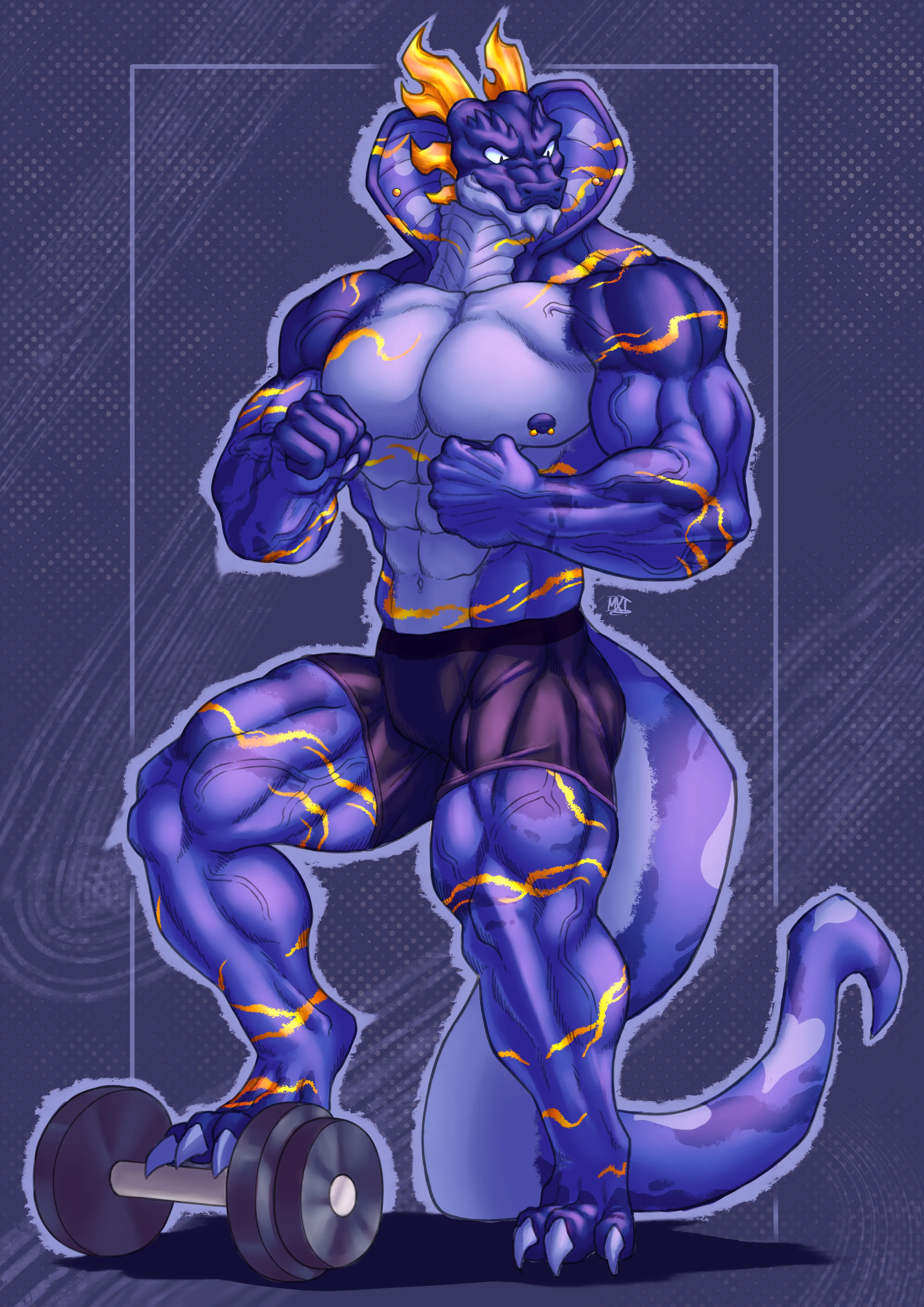 Art by Mixter
Whether it’s in photos or in real life, you’re going to see people in gyms with impossible physiques. And while not all of them are attributable to performance-enhancing drugs, some are! And it takes time to learn where that line is. More often though, people are simply deeper into their fitness journey than you are at the moment, and you have to learn to internalize that.
It’s not a race, and you’re not behind—you’re just at a different stage.
I’ll also point out that people (yourself included) look much much better in the gym than anywhere else for a variety of reasons—but most importantly:
- They likely have an active pump (a “pump” is the physiological phenomenon whereupon your muscles fill with extra blood after repeated exertion, increasing their size)
- The overhead lighting common in gyms is generally flattering for highlighting muscle tone—much more than most of our homes or bathrooms’ lighting
Let yourself be inspired, but don’t despair. Physique comes down to genetics, and your efforts. You can’t control your genetics, but everyone has the capacity to build strength and control their body’s growth.

For my fellow muscle furries out there: obviously a ton of the art we love or get of our own characters is fantastical. But personally I’m still inspired! I think it’s a lot of fun having some hyper-idealized, impossibly buff sexy furries to aspire to~
Separating aspirational fantasy from reality is part of the bodybuilding skillset, whether furry or otherwise
Motivation
 Old art but ALWAYS a vibe!
How the heck do you get and STAY motivated? Initial motivation can be kind of easy to find—maybe it’s New Years, maybe a friend finally convinced you to try out the gym, or maybe you got hurt recently and recovery has encouraged you to seek strength.
It can really be anything. But the first motivation is often not a lasting motivation.
So, what keeps you coming back? Ultimately it has to be something for *you.* Your goal in weightlifting is to hit a point where you’re self-motivated, where you’ve made enough progress or gained enough confidence that you simply look forward to the experience.
Here are my tips for chasing that in brief:
- Make it a social obligation—i.e. schedule weekly workouts with a friend
- Make it routine, and give yourself something to look forward to after or during every workout (a podcast, a TV show, a small treat)
- Pick a hyper-specific goal, and chase that—maybe you want 13in. biceps—be indulgent and make your early routines heavily focus that until you make progress!
- Fall in love with your gym space. This could mean making friends there, or just really enjoying a movement, exercise, or machine that just feels good
- Let others follow your gym journey—either social media or just talking to friends about it. Let people celebrate you!
And finally, check in with yourself as you go along. Explicitly ask your close friends for validation or support! It’s okay to literally ask for them to clap for you for going to the gym twice this week.
This is HARD. You are literally giving up your valuable free time to go lift rocks and set them back down. All because science + people have told you it can give you results. And true as it is, it’s undeniable that we humans struggle to believe something we can’t see or experience ourselves.
Game the system—use whatever it takes to get yourself past the beginning because I promise once you’ve hit your stride, once you’ve started to see or feel the results you’ve been chasing, it’ll become addictive. And then maybe you too will spend 2 weeks writing a love letter (“guide”) to the sport! 
 Art by Nate
Diet and Nutrition
If you want to change your body composition in any way–building muscle or cutting fat, the #1 thing to understand is Energy In/Energy Out. Gaining or losing body mass is just a matter of whether you’re consuming more calories than you expend each day. Whether it’s fat or muscle depends on your activity level.
If you haven’t, check out this or any Total Daily Energy Expenditure (TDEE) Calculator to get a rough estimate of how many calories your body burns just to maintain your current lifestyle.
What’s important to understand though is that any fad diet or fad “super food” etc. is hyper-simplified science at best. There’s no such thing as bad foods, just bad diets.
If it’s very important for you to have a certain treat then the key is just finding a diet that works around it. Letting yourself have a tasty treat is important to a successful diet! The mental boost is just as important as the continued dietary rigor.
Labeling specific foods in an overly simplistic manner as “good foods” and “bad foods” is not only inconsistent with the total diet approach, but it can cause many people to abandon efforts to make dietary improvements.
–Jeanne H Freeland-Graves, Susan Nitzke 3
Macros
“Macros” refers to the 3 macronutrients: Carbohydrates, Protein, and Fat.
Each Macro serves a multitude of important biological functions. A healthy diet will include some amount of each of these.
Briefly:
- Carbohydrates = primary source of energy–the body has a very easy time using carbs for energy
- Protein = support for building muscle and repairing systems within the body
- Fat = protective cushion around organs and the body, also needed for hormone production
Along with their other functions, macronutrients also provide energy, measured in kilocalories.
When you hear talk of “calories”, people are usually technically talking about kilo-calories. This probably won’t cause any issues, but keep it in mind with calculations.
To calculate how many calories are in your diet, you simply add up the macros in your diet, and multiply their amounts in grams by either 4 or 9 to find out how many calories they’re contributing.
- 1g Carbohydrates/Protein = 4 calories
- 1g Fat = 9 calories
Exercise vs. Diet
When it comes to researching “how do I build muscle or cut fat?”, you’ll usually find some statistic like “70-80% diet, 30-20% exercise”, meaning simply that monitoring + changing your diet is much more important than tweaking your exercise routine. And unfortunately it’s totally completely accurate.
It feels much more exciting and actionable to hear that if you just lift weights 3x a week you’ll get the physique of your dreams. And in the early days that will seem like it’s working. But you’ll hit a wall before long, because bigger muscles need more energy, and if you don’t compensate your growth with your diet, then your progress will stagnate.
The same goes in reverse for cutting fat—as you lose weight you’ll need to continue to update your diet to maintain a proper calorie deficit to keep losing fat.
Rapid-Fire FAQ:
- What about Cardio?
- Do it if you can, and if you enjoy it—just try and space it out from your weightlifting (i.e. rest)
- How can I avoid getting injured?
- Rest well, and focus on technique. Master mind-muscle connection before pushing super heavy. If you’re already injured or at higher risk, consult a doctor or physical therapist and find exercises for your situation
- What kind of gear do I need?
- Nothing special. Workout clothes you enjoy, and ideally shoes with flat, stable soles and wide toeboxes
- Should I stretch before lifting?
- Up to you, just don’t overdo it. In my opinion, it’s more important to do warmup exercises before big lifts. Example: Cable or Dumbbell Rotator Cuff warm up before performing bench press
App Suggestions
For logging and tracking food, pen and paper is totally fine. But through the years I’ve ended up gravitating to a few apps that really worked for me.
| App | Cost | Comment |
|---|---|---|
Cronometer  | Free (optional subscription) | Totally solid food/macro tracking app. Unlike the alternatives on the market Cronometer’s free version offers everything you need to actually track your nutrition |
Macrofactor  | $11.99/month | The best part is how it counts calories UP, not down, which feels kinder. It does a great job adjusting week-by-week, and it does not use workout data—it works exclusively around your weight data |
Macrofactor Workouts  | $11.99/month | Allows for importing workout CSV documents, and the UI is very well made. Exercise videos included natively with nearly every exercise—a high-quality demonstration of an exercise performed at 3 different angles. It’s so helpful, and the way it tracks exercises and reps + sets is very intuitive |
Fitness YouTubers I like
*(As of September 2026)
- Jeff Nippard: The big-name “Science-based Weightlifting” YouTuber. I’ve been using his workout routines for years now. I also use his “Macrofactor” app for dieting, and the new Workouts one for tracking my workouts. High quality videos, and great science based approach.
- Sean Nalewanyj: Extremely knowledgeable, shorts-focused YouTuber. His style is pretty sardonic and sarcastic as he does a fair bit of non-dogpiling anti-bs takedown shorts to make a point about good practice.
- Squat University: The absolute GOAT of Physical Therapy. I bought his book, and I credit him with 95% of my success in the last 3 years in alleviating back pain. The TL;DR of his philosophy is that most pain can be fixed with building strength in stabilization muscles (rotator cuff, hip flexors, etc.). Highly recommend if you’re in any chronic joint or muscle pain.
Glossary of Terms
| Term | Definition |
|---|---|
| Concentric | The contracting (“positive”) aspect of the lift. |
| Eccentric | The lowering (“negative”) aspect of the lift. |
| RPE | ”Rate of Perceived Exertion.” measure of how difficult a set was on a 1-10 scale, with 10 meaning muscular failure was achieved. A 9 means you could have gotten 1 more rep. Etc. |
| Rep | Short for “Repetition”, used to describe the number of movements of an exercise in a set. |
| Set | A number of exercise repetitions (reps) done all at once before resting. |
Discord Server
 Art by Ming
I host a public furry fitness server! While fitness and furry-themed, it’s an 18+ social space first and foremost. A good chill hangout space with the extra benefit of being filled with experienced fitness folk who can help answer questions and suggest workout routines.
Regal Furry Fitness invite link

Footnotes
-
Attentional Focus for Maximizing Muscle Development: The Mind-Muscle Connection ↩
-
Effect of free-weight vs. machine-based strength training on maximal strength, hypertrophy and jump performance - a systematic review and meta-analysis ↩
-
Position of the Academy of Nutrition and Dietetics: Total Diet Approach to Healthy Eating ↩
Leave a comment?
- This comment system is custom built–loosely following Emily Goto's example on her blog.
- This is a static site, so comments are added manually by me
-
 I ask for a Bsky account because I'm lazily using their API to fetch avatar images from there (instead of using Gravatar, for
instance)
I ask for a Bsky account because I'm lazily using their API to fetch avatar images from there (instead of using Gravatar, for
instance)
-
 If you do not provide a Bsky account, your comment will have this picture of Wrex instead:
Hi, I'm Regal!

I'm a communist cobra obsessed with coffee, weightlifting, and Chicago!  This is my personal site where I blog about coffee shops and other things.
Thanks for stopping by! Hit me up on the socials if you have any comments or want to say hi, or if you've
got any cool coffee shop suggestions here in Chicago